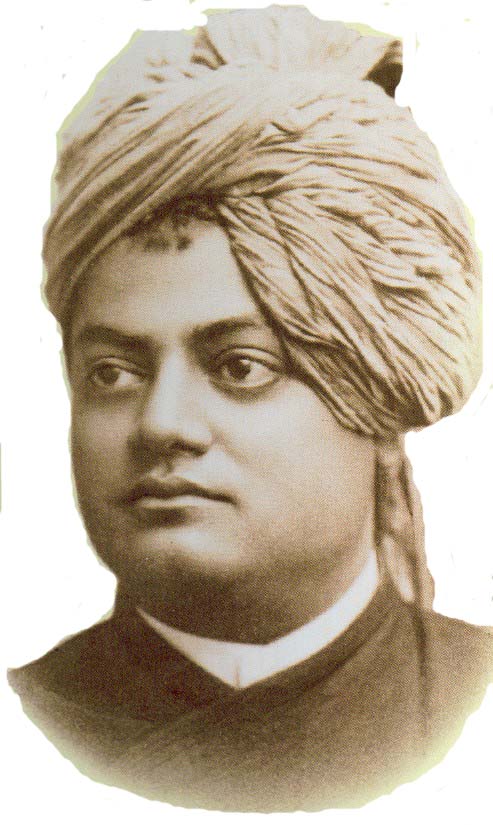
AFTER HIS MASTER'S DEATH i.e AFTER RAMAKRISHNA'S DEATH SWAMI VIVEKANANDA DECICDED TO TOUR THE WHOLE WORLD AS IT WAS HIS TIME TO KNOW THE MANY WONDERS OF INDIA i.e IN THE SENSE TO KNOW MORE ABOUT HIS MOTHERLAND. HE DECIDED TO TRAVEL FROM KASHMIR IN THE NORTH TO KANYAKUMARI IN THE SOUTH AND FROM ARUNACHAL PRADESH IN THE WEST TO GUJARATH IN THE EAST. HE USED TO STAY IN ANYONE'S HOUSE HE WISHED FOR DURING HIS JOURNEY i.e HE DID NOT CARE FOR CASTES AND CREDE.
SO ONE DAY HE WENT TO A GREAT KING'S PALACE . THE KING HAD INVITED SWAMI VIVEKANANDA TO GIVE MONEY FOR THE JOURNEY WHICH HE WAS UNDERTAKING(HE WAS GOING TO CHICAGO AS A REPRESENTATIVE OF INDIA). WHEN SWAMI VIVEKANANDA WENT THERE THE KING AND EVERYONE INVITED HIM AND WHEN THEY WERE HAVING SOME TALKS WITH SWAMI VIVEKANANDA THE KING SUDDENLY ASKED WHETHER HE BELIEVED IN IDOL WORSHIP.FOR THIS SWAMI VIVEKANANDA TOLD THAT HE DID BELIEVE IN IDOL WORSHIP. SO THE KING IN REPLY TOLD THAT HOW CAN THE GOD BE A THING MADE OF STONE. SO SWAMI VIVEKANANDA ASKED THE MINISTER OF THE KING TO HAND OVER THE KINGS STATUE IN THE COURT AND ASKED HIM TO SPIT ON THE STATUE TELLING THAT IT WAS NOT THE KING BUT A MERE STATUE! THE MINISTER COULD NOT DO IT AND THEN SWAMI VIVEKANANDA TOLD THE KING THAT JUST AS HIS STATUE WAS A REPLICA OF HIM THE GOD'S IDOL WAS ALSO A REPLICA OF THE GOD AND THIS IDOL WOULD HELP THE COMMAN MAN TO PRAY!!!!!!!!!!!!!!!!
-V.GANESH KUMAR
Friday, August 22, 2008


Wednesday, August 20, 2008
INDEPENDENCE DAY SPECIAL REPORT--1
- INDIA WAS GIVEN ITS INDEPENDENCE ON MID NIGHT i.e AT 12:00 AM .THE MAIN INTENTION WAS THAT THE BRITISHERS WANTED TO BE ON THE BRIGHT SIDE THAT IS ON THE LIGHT SIDE . ACCORDINGLY WHEN INDIA HAS GOT NIGHT HERE BRITISHERS HAVE GOT DAY LIGHT IN THEIR COUNTRY.SO THEY DID NOT WANT INDIANS TO PROSPER IN ANY FIELD BY GIVING INDEPENDENCE AT 12 MIDIGHT.
- WHAT WAS SWAMI VIVEKANANDA'S CONTRIBUTION TO FREEDOM STRUGLE?
ONCE WHEN SWAMI VIVEKANANDA WAS IN AMERICA A LADY COMMENTS ABOUT THE COWARDLY NATURE OF THE INDIANS IN A NEWSPAPER. SO ENRAGED SWAMI VIVEKANANDA TOLD THAT IF HE WAS SHOT IN THE MIDDLE OF THE ROAD IN AMERICA THEN SHE WOULD KNOW THE COWARDLY NATURE OF THE INDIANS.........................
- THE FOLLOWING INCIDENT SHOWS US ABOUT THE CONTRIBUTION OF MOTHERS IN INDIA'S FREEDOM STRUGLE!!!!!!!!!!!!!!!!!!!!!!!!!
ONCE WHEN RAM PRASAD BISMIL WAS CAUGHT AND WAS ABOUT TO BE HANGED THE VERY NEXT DAY HE MET HIS MOTHER IN THE JAIL............HIS MOTHER WAS TO SEE HIM AND SHE WAS FULL OF TEARS................SEEING THIS BISMILJI ALSO STARTED CRYING SO HIS MOTHER TOLD HIM TAHT SEE WAS CRYING NOT BECAUSE SHE WAS LOSING HER SON BUT BECAUSE THERE WAS NO ONE LEFT TO CARY ON THE WORK OF FIGHTING OR FREEDOM AGAINST THE BRITISHERS.
- WAS GANDHIJI THE MAIN REASON FOR BHAGAT SINGH'S DEATH?
CERTAINLY NO!!!!!!!!!!!!!!!BECAUSE BHAGAT SINGH HAD DECIDED NOT TO LIVE ! WHEN HE HIMSELF HAD NOT DECIDED TO LIVE THEN HOW CAN WE EXPECT GANDHIJI TO HELP HIM!!!!!!!!!!!!!!!!!!!
- V.GANESH KUMARozone depletion
Ozone depletion describes two distinct, but related observations: a slow, steady decline of about 4 percent per decade in the total amount of ozone in Earth's stratosphere since the late 1970s; and a much larger, but seasonal, decrease in stratospheric ozone over Earth's polar regions during the same period. The latter phenomenon is commonly referred to as the ozone hole. In addition to this well-known stratospheric ozone depletion, there are also tropospheric ozone depletion events, which occur near the surface in polar regions during spring.
The detailed mechanism by which the polar ozone holes form is different from that for the mid-latitude thinning, but the most important process in both trends is catalytic destruction of ozone by atomic chlorine and bromine.[1] The main source of these halogen atoms in the stratosphere is photodissociation of chlorofluorocarbon (CFC) compounds, commonly called freons, and of bromofluorocarbon compounds known as halons. These compounds are transported into the stratosphere after being emitted at the surface. Both ozone depletion mechanisms strengthened as emissions of CFCs and halons increased.
CFCs and other contributory substances are commonly referred to as ozone-depleting substances (ODS). Since the ozone layer prevents most harmful UVB wavelengths (270–315 nm) of ultraviolet light (UV light) from passing through the Earth's atmosphere, observed and projected decreases in ozone have generated worldwide concern leading to adoption of the Montreal Protocol banning the production of CFCs and halons as well as related ozone depleting chemicals such as carbon tetrachloride and trichloroethane. It is suspected that a variety of biological consequences such as increases in skin cancer, damage to plants, and reduction of plankton populations in the ocean's photic zone may result from the increased UV exposure due to ozone depletion.
Three forms (or allotropes) of oxygen are involved in the ozone-oxygen cycle: Oxygen atoms (O or atomic oxygen), oxygen gas (O2 or diatomic oxygen), and ozone gas (O3 or triatomic oxygen). Ozone is formed in the stratosphere when oxygen molecules photodissociate after absorbing an ultraviolet photon whose wavelength is shorter than 240 nm. This produces two oxygen atoms. The atomic oxygen then combines with O2 to create O3. Ozone molecules absorb UV light between 310 and 200 nm, following which ozone splits into a molecule of O2 and an oxygen atom. The oxygen atom then joins up with an oxygen molecule to regenerate ozone. This is a continuing process which terminates when an oxygen atom "recombines" with an ozone molecule to make two O2 molecules: O + O3 → 2 O2
The overall amount of ozone in the stratosphere is determined by a balance between photochemical production and recombination.
Ozone can be destroyed by a number of free radical catalysts, the most important of which are the hydroxyl radical (OH·), the nitric oxide radical (NO·) and atomic chlorine (Cl·) and bromine (Br·). All of these have both natural and anthropogenic (manmade) sources; at the present time, most of the OH· and NO· in the stratosphere is of natural origin, but human activity has dramatically increased the high in oxygen chlorine and bromine. These elements are found in certain stable organic compounds, especially chlorofluorocarbons (CFCs), which may find their way to the stratosphere without being destroyed in the troposphere due to their low reactivity. Once in the stratosphere, the Cl and Br atoms are liberated from the parent compounds by the action of ultraviolet light, e.g. ('h' is Planck's constant, 'ν' is frequency of electromagnetic radiation)
CFCl3 + hν → CFCl2 + Cl
The Cl and Br atoms can then destroy ozone molecules through a variety of catalytic cycles. In the simplest example of such a cycle,a chlorine atom reacts with an ozone molecule, taking an oxygen atom with it (forming ClO) and leaving a normal oxygen molecule. The chlorine monoxide (i.e., the ClO) can react with a second molecule of ozone (i.e., O3) to yield another chlorine atom and two molecules of oxygen. The chemical shorthand for these gas-phase reactions is:
Cl + O3 → ClO + O2
ClO + O3 → Cl + 2 O2
The overall effect leads to an overall decrease in the amount of ozone. More complicated mechanisms have been discovered that lead to ozone destruction in the lower stratosphere as well.
A single chlorine atom would keep on destroying ozone for up to two years (the time scale for transport back down to the troposphere) were it not for reactions that remove them from this cycle by forming reservoir species such as hydrogen chloride (HCl) and chlorine nitrate (ClONO2). On a per atom basis, bromine is even more efficient than chlorine at destroying ozone, but there is much less bromine in the atmosphere at present. As a result, both chlorine and bromine contribute significantly to the overall ozone depletion. Laboratory studies have shown that fluorine and iodine atoms participate in analogous catalytic cycles. However, in the Earth's stratosphere, fluorine atoms react rapidly with water and methane to form strongly-bound HF, while organic molecules which contain iodine react so rapidly in the lower atmosphere that they do not reach the stratosphere in significant quantities. Furthermore, a single chlorine atom is able to react with 100,000 ozone molecules. This fact plus the amount of chlorine released into the atmosphere by chlorofluorocarbons(CFCs) yearly demonstrates how dangerous CFCs are to the environment.
quantitative understanding of the chemical ozone loss process
New research on the breakdown of a key molecule in these ozone-depleting chemicals, dichlorine peroxide (Cl2O2), calls into question the completeness of present atmospheric models of polar ozone depletion. Specifically, chemists at NASA's Jet Propulsion Laboratory in Pasadena, California, found in 2007 that the temperatures, and the spectrum and intensity of radiation present in the stratosphere created conditions insufficient to allow the rate of chemical-breakdown required to release chlorine radicals in the volume necessary to explain observed rates of ozone depletion. Instead, laboratory tests, designed to be the most accurate reflection of stratospheric conditions to date, showed the decay of the crucial molecule almost a magnitude lower than previously thought.
Observations on ozone layer depletion
The most pronounced decrease in ozone has been in the lower stratosphere. However, the ozone hole is most usually measured not in terms of ozone concentrations at these levels (which are typically of a few parts per million) but by reduction in the total column ozone, above a point on the Earth's surface, which is normally expressed in Dobson units, abbreviated as "DU". Marked decreases in column ozone in the Antarctic spring and early summer compared to the early 1970s and before have been observed using instruments such as the Total Ozone Mapping Spectrometer (TOMS).
Lowest value of ozone measured by TOMS each year in the ozone hole
Reductions of up to 70% in the ozone column observed in the austral (southern hemispheric) spring over Antarctica and first reported in 1985 (Farman et al 1985) are continuing. Through the 1990s, total column ozone in September and October have continued to be 40–50% lower than pre-ozone-hole values. In the Arctic the amount lost is more variable year-to-year than in the Antarctic. The greatest declines, up to 30%, are in the winter and spring, when the stratosphere is colder.
Reactions that take place on polar stratospheric clouds (PSCs) play an important role in enhancing ozone depletion. PSCs form more readily in the extreme cold of Antarctic stratosphere. This is why ozone holes first formed, and are deeper, over Antarctica. Early models failed to take PSCs into account and predicted a gradual global depletion, which is why the sudden Antarctic ozone hole was such a surprise to many scientists.
In middle latitudes it is preferable to speak of ozone depletion rather than holes. Declines are about 3% below pre-1980 values for 35–60°N and about 6% for 35–60°S. In the tropics, there are no significant trends.
Ozone depletion also explains much of the observed reduction in stratospheric and upper tropospheric temperatures.The source of the warmth of the stratosphere is the absorption of UV radiation by ozone, hence reduced ozone leads to cooling. Some stratospheric cooling is also predicted from increases in greenhouse gases such as CO2; however the ozone-induced cooling appears to be dominant.
Predictions of ozone levels remain difficult. The World Meteorological Organization Global Ozone Research and Monitoring Project - Report No. 44 comes out strongly in favor for the Montreal Protocol, but notes that a UNEP 1994 Assessment overestimated ozone loss for the 1994–1997 period.
The ozone hole and its causes
Image of the largest Antarctic ozone hole ever recorded (September 2006).
The Antarctic ozone hole is an area of the Antarctic stratosphere in which the recent ozone levels have dropped to as low as 33% of their pre-1975 values. The ozone hole occurs during the Antarctic spring, from September to early December, as strong westerly winds start to circulate around the continent and create an atmospheric container. Within this polar vortex, over 50% of the lower stratospheric ozone is destroyed during the Antarctic spring.
As explained above, the overall cause of ozone depletion is the presence of chlorine-containing source gases (primarily CFCs and related halocarbons). In the presence of UV light, these gases dissociate, releasing chlorine atoms, which then go on to catalyze ozone destruction. The Cl-catalyzed ozone depletion can take place in the gas phase, but it is dramatically enhanced in the presence of polar stratospheric clouds (PSCs).
These polar stratospheric clouds form during winter, in the extreme cold. Polar winters are dark, consisting of 3 months without solar radiation (sunlight). Not only lack of sunlight contributes to a decrease in temperature but also the polar vortex traps and chills air. Temperatures hover around or below -80 °C. These low temperatures form cloud particles and are composed of either nitric acid (Type I PSC) or ice (Type II PSC). Both types provide surfaces for chemical reactions that lead to ozone destruction.
The photochemical processes involved are complex but well understood. The key observation is that, ordinarily, most of the chlorine in the stratosphere resides in stable "reservoir" compounds, primarily hydrogen chloride (HCl) and chlorine nitrate (ClONO2). During the Antarctic winter and spring, however, reactions on the surface of the polar stratospheric cloud particles convert these "reservoir" compounds into reactive free radicals (Cl and ClO). The clouds can also remove NO2 from the atmosphere by converting it to nitric acid, which prevents the newly formed ClO from being converted back into ClONO2.
The role of sunlight in ozone depletion is the reason why the Antarctic ozone depletion is greatest during spring. During winter, even though PSCs are at their most abundant, there is no light over the pole to drive the chemical reactions. During the spring, however, the sun comes out, providing energy to drive photochemical reactions, and melt the polar stratospheric clouds, releasing the trapped compounds.
Most of the ozone that is destroyed is in the lower stratosphere, in contrast to the much smaller ozone depletion through homogeneous gas phase reactions, which occurs primarily in the upper stratosphere.
Warming temperatures near the end of spring break up the vortex around mid-December. As warm, ozone-rich air flows in from lower latitudes, the PSCs are destroyed, the ozone depletion process shuts down, and the ozone hole heals.
Consequences of ozone layer depletion
Since the ozone layer absorbs UVB ultraviolet light from the Sun, ozone layer depletion is expected to increase surface UVB levels, which could lead to damage, including increases in skin cancer. This was the reason for the Montreal Protocol. Although decreases in stratospheric ozone are well-tied to CFCs and there are good theoretical reasons to believe that decreases in ozone will lead to increases in surface UVB, there is no direct observational evidence linking ozone depletion to higher incidence of skin cancer in human beings. This is partly due to the fact that UVA, which has also been implicated in some forms of skin cancer, is not absorbed by ozone, and it is nearly impossible to control statistics for lifestyle changes in the populace.
Increased UV
Ozone, while a minority constituent in the earth's atmosphere, is responsible for most of the absorption of UVB radiation. The amount of UVB radiation that penetrates through the ozone layer decreases exponentially with the slant-path thickness/density of the layer. Correspondingly, a decrease in atmospheric ozone is expected to give rise to significantly increased levels of UVB near the surface.
Increases in surface UVB due to the ozone hole can be partially inferred by radiative transfer model calculations, but cannot be calculated from direct measurements because of the lack of reliable historical (pre-ozone-hole) surface UV data, although more recent surface UV observation measurement programmes exist (e.g. at Lauder, New Zealand).
Because it is this same UV radiation that creates ozone in the ozone layer from O2 (regular oxygen) in the first place, a reduction in stratospheric ozone would actually tend to increase photochemical production of ozone at lower levels (in the troposphere), although the overall observed trends in total column ozone still show a decrease, largely because ozone produced lower down has a naturally shorter photochemical lifetime, so it is destroyed before the concentrations could reach a level which would compensate for the ozone reduction higher up.
Current events and future prospects of ozone depletion
Ozone-depleting gas trends
Since the adoption and strengthening of the Montreal Protocol has led to reductions in the emissions of CFCs, atmospheric concentrations of the most significant compounds have been declining. These substances are being gradually removed from the atmosphere. By 2015, the Antarctic ozone hole would have reduced by only 1 million km² out of 25 (Newman et al., 2004); complete recovery of the Antarctic ozone layer will not occur until the year 2050 or later. Work has suggested that a detectable (and statistically significant) recovery will not occur until around 2024, with ozone levels recovering to 1980 levels by around 2068.
The decrease in ozone-depleting chemicals has also been significantly affected by a decrease in bromine-containing chemicals. The data suggest that substantial natural sources exist for atmospheric methyl bromide (CH3Br).
The 2004 ozone hole ended in November 2004, daily minimum stratospheric temperatures in the Antarctic lower stratosphere increased to levels that are too warm for the formation of polar stratospheric clouds (PSCs) about 2 to 3 weeks earlier than in most recent years.
The Arctic winter of 2005 was extremely cold in the stratosphere; PSCs were abundant over many high-latitude areas until dissipated by a big warming event, which started in the upper stratosphere during February and spread throughout the Arctic stratosphere in March. The size of the Arctic area of anomalously low total ozone in 2004-2005 was larger than in any year since 1997. The predominance of anomalously low total ozone values in the Arctic region in the winter of 2004-2005 is attributed to the very low stratospheric temperatures and meteorological conditions favorable for ozone destruction along with the continued presence of ozone destroying chemicals in the stratosphere.
A 2005 IPCC summary of ozone issues observed that observations and model calculations suggest that the global average amount of ozone depletion has now approximately stabilized. Although considerable variability in ozone is expected from year to year, including in polar regions where depletion is largest, the ozone layer is expected to begin to recover in coming decades due to declining ozone-depleting substance concentrations, assuming full compliance with the Montreal Protocol.
Temperatures during the Arctic winter of 2006 stayed fairly close to the long-term average until late January, with minimum readings frequently cold enough to produce PSCs. During the last week of January, however, a major warming event sent temperatures well above normal — much too warm to support PSCs. By the time temperatures dropped back to near normal in March, the seasonal norm was well above the PSC threshold.Preliminary satellite instrument-generated ozone maps show seasonal ozone buildup slightly below the long-term means for the Northern Hemisphere as a whole, although some high ozone events have occurred. During March 2006, the Arctic stratosphere poleward of 60 degrees North Latitude was free of anomalously low ozone areas except during the three-day period from March 17 to 19 when the total ozone cover fell below 300 DU over part of the North Atlantic region from Greenland to Scandinavia.
The area where total column ozone is less than 220 DU (the accepted definition of the boundary of the ozone hole) was relatively small until around 20 August 2006. Since then the ozone hole area increased rapidly, peaking at 29 million km² September 24. In October 2006, NASA reported that the year's ozone hole set a new area record with a daily average of 26 million km² between 7 September and 13 October 2006; total ozone thicknesses fell as low as 85 DU on October 8. The two factors combined, 2006 sees the worst level of depletion in recorded ozone history. The depletion is attributed to the temperatures above the Antarctic reaching the lowest recording since comprehensive records began in 1979.
The Antarctic ozone hole is expected to continue for decades. Ozone concentrations in the lower stratosphere over Antarctica will increase by 5%–10% by 2020 and return to pre-1980 levels by about 2060–2075, 10–25 years later than predicted in earlier assessments. This is because of revised estimates of atmospheric concentrations of Ozone Depleting Substances — and a larger predicted future usage in developing countries. Another factor which may aggravate ozone depletion is the draw-down of nitrogen oxides from above the stratosphere due to changing wind patterns.
Misconceptions about ozone depletion
A few of the more common misunderstandings about ozone depletion are addressed briefly here; more detailed discussions can be found in the ozone-depletion FAQ.
CFCs are "too heavy" to reach the stratosphere
It is sometimes stated that since CFC molecules are much heavier than nitrogen or oxygen, they cannot reach the stratosphere in significant quantities.[45] But atmospheric gases are not sorted by weight; the forces of wind (turbulence) are strong enough to fully intermix gases in the atmosphere. CFCs are heavier than air, but just like argon, krypton and other heavy gases with a long lifetime, they are uniformly distributed throughout the turbosphere and reach the upper atmosphere.
Man-made chlorine is insignificant compared to natural sources
Another objection occasionally voiced is that It is generally agreed that natural sources of tropospheric chlorine (volcanoes, ocean spray, etc.) are four to five orders of magnitude larger than man-made sources. While strictly true, tropospheric chlorine is irrelevant; it is stratospheric chlorine that matters to ozone depletion. Chlorine from ocean spray is soluble and thus is washed out by rainfall before it reaches the stratosphere. CFCs, in contrast, are insoluble and long-lived, which allows them to reach the stratosphere. Even in the lower atmosphere there is more chlorine present in the form of CFCs and related haloalkanes than there is in HCl from salt spray, and in the stratosphere the halocarbons dominate overwhelmingly.[47] Only one of these halocarbons, methyl chloride, has a predominantly natural source, and it is responsible for about 20 percent of the chlorine in the stratosphere; the remaining 80% comes from manmade compounds.
Very large volcanic eruptions can inject HCl directly into the stratosphere, but direct measurements have shown that their contribution is small compared to that of chlorine from CFCs. A similar erroneous assertion is that soluble halogen compounds from the volcanic plume of Mount Erebus on Ross Island, Antarctica are a major contributor to the Antarctic ozone hole.
An ozone hole was first observed in 1956
G.M.B. Dobson (Exploring the Atmosphere, 2nd Edition, Oxford, 1968) mentioned that when springtime ozone levels over Halley Bay were first measured, he was surprised to find that they were ~320 DU, about 150 DU below spring levels, ~450 DU, in the Arctic. These, however, were the pre-ozone hole normal climatological values. What Dobson describes is essentially the baseline from which the ozone hole is measured: actual ozone hole values are in the 150–100 DU range.
The discrepancy between the Arctic and Antarctic noted by Dobson was primarily a matter of timing: during the Arctic spring ozone levels rose smoothly, peaking in April, whereas in the Antarctic they stayed approximately constant during early spring, rising abruptly in November when the polar vortex broke down.
The behavior seen in the Antarctic ozone hole is completely different. Instead of staying constant, early springtime ozone levels suddenly drop from their already low winter values, by as much as 50%, and normal values are not reached again until December.
[edit] If the theory were correct, the ozone hole should be above the sources of CFCs
CFCs are well mixed in the troposphere and the stratosphere. The reason the ozone hole occurs above Antarctica is not because there are more CFCs there but because the low temperatures allow polar stratospheric clouds to form.There have been anomalous discoveries of significant, serious, localized "holes" above other parts of the globe .The "ozone hole" is a hole in the ozone layer
When the "ozone hole" forms, essentially all of the ozone in the lower stratosphere is destroyed. The upper stratosphere is much less affected, however, so that the overall amount of ozone over the continent declines by 50 percent or more. The ozone hole does not go all the way through the layer; on the other hand, it is not a uniform 'thinning' of the layer either. It's a "hole" in the sense of "a hole in the ground", a depression, not in the sense of "a hole in the windshield."
World Ozone Day
In 1994, the United Nations General Assembly voted to designate September 16 as "World Ozone Day", to commemorate the signing of the Montreal Protocol on that date in 1987.
-V.GANESH KUMAR
The detailed mechanism by which the polar ozone holes form is different from that for the mid-latitude thinning, but the most important process in both trends is catalytic destruction of ozone by atomic chlorine and bromine.[1] The main source of these halogen atoms in the stratosphere is photodissociation of chlorofluorocarbon (CFC) compounds, commonly called freons, and of bromofluorocarbon compounds known as halons. These compounds are transported into the stratosphere after being emitted at the surface. Both ozone depletion mechanisms strengthened as emissions of CFCs and halons increased.
CFCs and other contributory substances are commonly referred to as ozone-depleting substances (ODS). Since the ozone layer prevents most harmful UVB wavelengths (270–315 nm) of ultraviolet light (UV light) from passing through the Earth's atmosphere, observed and projected decreases in ozone have generated worldwide concern leading to adoption of the Montreal Protocol banning the production of CFCs and halons as well as related ozone depleting chemicals such as carbon tetrachloride and trichloroethane. It is suspected that a variety of biological consequences such as increases in skin cancer, damage to plants, and reduction of plankton populations in the ocean's photic zone may result from the increased UV exposure due to ozone depletion.
Three forms (or allotropes) of oxygen are involved in the ozone-oxygen cycle: Oxygen atoms (O or atomic oxygen), oxygen gas (O2 or diatomic oxygen), and ozone gas (O3 or triatomic oxygen). Ozone is formed in the stratosphere when oxygen molecules photodissociate after absorbing an ultraviolet photon whose wavelength is shorter than 240 nm. This produces two oxygen atoms. The atomic oxygen then combines with O2 to create O3. Ozone molecules absorb UV light between 310 and 200 nm, following which ozone splits into a molecule of O2 and an oxygen atom. The oxygen atom then joins up with an oxygen molecule to regenerate ozone. This is a continuing process which terminates when an oxygen atom "recombines" with an ozone molecule to make two O2 molecules: O + O3 → 2 O2
The overall amount of ozone in the stratosphere is determined by a balance between photochemical production and recombination.
Ozone can be destroyed by a number of free radical catalysts, the most important of which are the hydroxyl radical (OH·), the nitric oxide radical (NO·) and atomic chlorine (Cl·) and bromine (Br·). All of these have both natural and anthropogenic (manmade) sources; at the present time, most of the OH· and NO· in the stratosphere is of natural origin, but human activity has dramatically increased the high in oxygen chlorine and bromine. These elements are found in certain stable organic compounds, especially chlorofluorocarbons (CFCs), which may find their way to the stratosphere without being destroyed in the troposphere due to their low reactivity. Once in the stratosphere, the Cl and Br atoms are liberated from the parent compounds by the action of ultraviolet light, e.g. ('h' is Planck's constant, 'ν' is frequency of electromagnetic radiation)
CFCl3 + hν → CFCl2 + Cl
The Cl and Br atoms can then destroy ozone molecules through a variety of catalytic cycles. In the simplest example of such a cycle,a chlorine atom reacts with an ozone molecule, taking an oxygen atom with it (forming ClO) and leaving a normal oxygen molecule. The chlorine monoxide (i.e., the ClO) can react with a second molecule of ozone (i.e., O3) to yield another chlorine atom and two molecules of oxygen. The chemical shorthand for these gas-phase reactions is:
Cl + O3 → ClO + O2
ClO + O3 → Cl + 2 O2
The overall effect leads to an overall decrease in the amount of ozone. More complicated mechanisms have been discovered that lead to ozone destruction in the lower stratosphere as well.
A single chlorine atom would keep on destroying ozone for up to two years (the time scale for transport back down to the troposphere) were it not for reactions that remove them from this cycle by forming reservoir species such as hydrogen chloride (HCl) and chlorine nitrate (ClONO2). On a per atom basis, bromine is even more efficient than chlorine at destroying ozone, but there is much less bromine in the atmosphere at present. As a result, both chlorine and bromine contribute significantly to the overall ozone depletion. Laboratory studies have shown that fluorine and iodine atoms participate in analogous catalytic cycles. However, in the Earth's stratosphere, fluorine atoms react rapidly with water and methane to form strongly-bound HF, while organic molecules which contain iodine react so rapidly in the lower atmosphere that they do not reach the stratosphere in significant quantities. Furthermore, a single chlorine atom is able to react with 100,000 ozone molecules. This fact plus the amount of chlorine released into the atmosphere by chlorofluorocarbons(CFCs) yearly demonstrates how dangerous CFCs are to the environment.
quantitative understanding of the chemical ozone loss process
New research on the breakdown of a key molecule in these ozone-depleting chemicals, dichlorine peroxide (Cl2O2), calls into question the completeness of present atmospheric models of polar ozone depletion. Specifically, chemists at NASA's Jet Propulsion Laboratory in Pasadena, California, found in 2007 that the temperatures, and the spectrum and intensity of radiation present in the stratosphere created conditions insufficient to allow the rate of chemical-breakdown required to release chlorine radicals in the volume necessary to explain observed rates of ozone depletion. Instead, laboratory tests, designed to be the most accurate reflection of stratospheric conditions to date, showed the decay of the crucial molecule almost a magnitude lower than previously thought.
Observations on ozone layer depletion
The most pronounced decrease in ozone has been in the lower stratosphere. However, the ozone hole is most usually measured not in terms of ozone concentrations at these levels (which are typically of a few parts per million) but by reduction in the total column ozone, above a point on the Earth's surface, which is normally expressed in Dobson units, abbreviated as "DU". Marked decreases in column ozone in the Antarctic spring and early summer compared to the early 1970s and before have been observed using instruments such as the Total Ozone Mapping Spectrometer (TOMS).
Lowest value of ozone measured by TOMS each year in the ozone hole
Reductions of up to 70% in the ozone column observed in the austral (southern hemispheric) spring over Antarctica and first reported in 1985 (Farman et al 1985) are continuing. Through the 1990s, total column ozone in September and October have continued to be 40–50% lower than pre-ozone-hole values. In the Arctic the amount lost is more variable year-to-year than in the Antarctic. The greatest declines, up to 30%, are in the winter and spring, when the stratosphere is colder.
Reactions that take place on polar stratospheric clouds (PSCs) play an important role in enhancing ozone depletion. PSCs form more readily in the extreme cold of Antarctic stratosphere. This is why ozone holes first formed, and are deeper, over Antarctica. Early models failed to take PSCs into account and predicted a gradual global depletion, which is why the sudden Antarctic ozone hole was such a surprise to many scientists.
In middle latitudes it is preferable to speak of ozone depletion rather than holes. Declines are about 3% below pre-1980 values for 35–60°N and about 6% for 35–60°S. In the tropics, there are no significant trends.
Ozone depletion also explains much of the observed reduction in stratospheric and upper tropospheric temperatures.The source of the warmth of the stratosphere is the absorption of UV radiation by ozone, hence reduced ozone leads to cooling. Some stratospheric cooling is also predicted from increases in greenhouse gases such as CO2; however the ozone-induced cooling appears to be dominant.
Predictions of ozone levels remain difficult. The World Meteorological Organization Global Ozone Research and Monitoring Project - Report No. 44 comes out strongly in favor for the Montreal Protocol, but notes that a UNEP 1994 Assessment overestimated ozone loss for the 1994–1997 period.
The ozone hole and its causes
Image of the largest Antarctic ozone hole ever recorded (September 2006).
The Antarctic ozone hole is an area of the Antarctic stratosphere in which the recent ozone levels have dropped to as low as 33% of their pre-1975 values. The ozone hole occurs during the Antarctic spring, from September to early December, as strong westerly winds start to circulate around the continent and create an atmospheric container. Within this polar vortex, over 50% of the lower stratospheric ozone is destroyed during the Antarctic spring.
As explained above, the overall cause of ozone depletion is the presence of chlorine-containing source gases (primarily CFCs and related halocarbons). In the presence of UV light, these gases dissociate, releasing chlorine atoms, which then go on to catalyze ozone destruction. The Cl-catalyzed ozone depletion can take place in the gas phase, but it is dramatically enhanced in the presence of polar stratospheric clouds (PSCs).
These polar stratospheric clouds form during winter, in the extreme cold. Polar winters are dark, consisting of 3 months without solar radiation (sunlight). Not only lack of sunlight contributes to a decrease in temperature but also the polar vortex traps and chills air. Temperatures hover around or below -80 °C. These low temperatures form cloud particles and are composed of either nitric acid (Type I PSC) or ice (Type II PSC). Both types provide surfaces for chemical reactions that lead to ozone destruction.
The photochemical processes involved are complex but well understood. The key observation is that, ordinarily, most of the chlorine in the stratosphere resides in stable "reservoir" compounds, primarily hydrogen chloride (HCl) and chlorine nitrate (ClONO2). During the Antarctic winter and spring, however, reactions on the surface of the polar stratospheric cloud particles convert these "reservoir" compounds into reactive free radicals (Cl and ClO). The clouds can also remove NO2 from the atmosphere by converting it to nitric acid, which prevents the newly formed ClO from being converted back into ClONO2.
The role of sunlight in ozone depletion is the reason why the Antarctic ozone depletion is greatest during spring. During winter, even though PSCs are at their most abundant, there is no light over the pole to drive the chemical reactions. During the spring, however, the sun comes out, providing energy to drive photochemical reactions, and melt the polar stratospheric clouds, releasing the trapped compounds.
Most of the ozone that is destroyed is in the lower stratosphere, in contrast to the much smaller ozone depletion through homogeneous gas phase reactions, which occurs primarily in the upper stratosphere.
Warming temperatures near the end of spring break up the vortex around mid-December. As warm, ozone-rich air flows in from lower latitudes, the PSCs are destroyed, the ozone depletion process shuts down, and the ozone hole heals.
Consequences of ozone layer depletion
Since the ozone layer absorbs UVB ultraviolet light from the Sun, ozone layer depletion is expected to increase surface UVB levels, which could lead to damage, including increases in skin cancer. This was the reason for the Montreal Protocol. Although decreases in stratospheric ozone are well-tied to CFCs and there are good theoretical reasons to believe that decreases in ozone will lead to increases in surface UVB, there is no direct observational evidence linking ozone depletion to higher incidence of skin cancer in human beings. This is partly due to the fact that UVA, which has also been implicated in some forms of skin cancer, is not absorbed by ozone, and it is nearly impossible to control statistics for lifestyle changes in the populace.
Increased UV
Ozone, while a minority constituent in the earth's atmosphere, is responsible for most of the absorption of UVB radiation. The amount of UVB radiation that penetrates through the ozone layer decreases exponentially with the slant-path thickness/density of the layer. Correspondingly, a decrease in atmospheric ozone is expected to give rise to significantly increased levels of UVB near the surface.
Increases in surface UVB due to the ozone hole can be partially inferred by radiative transfer model calculations, but cannot be calculated from direct measurements because of the lack of reliable historical (pre-ozone-hole) surface UV data, although more recent surface UV observation measurement programmes exist (e.g. at Lauder, New Zealand).
Because it is this same UV radiation that creates ozone in the ozone layer from O2 (regular oxygen) in the first place, a reduction in stratospheric ozone would actually tend to increase photochemical production of ozone at lower levels (in the troposphere), although the overall observed trends in total column ozone still show a decrease, largely because ozone produced lower down has a naturally shorter photochemical lifetime, so it is destroyed before the concentrations could reach a level which would compensate for the ozone reduction higher up.
Current events and future prospects of ozone depletion
Ozone-depleting gas trends
Since the adoption and strengthening of the Montreal Protocol has led to reductions in the emissions of CFCs, atmospheric concentrations of the most significant compounds have been declining. These substances are being gradually removed from the atmosphere. By 2015, the Antarctic ozone hole would have reduced by only 1 million km² out of 25 (Newman et al., 2004); complete recovery of the Antarctic ozone layer will not occur until the year 2050 or later. Work has suggested that a detectable (and statistically significant) recovery will not occur until around 2024, with ozone levels recovering to 1980 levels by around 2068.
The decrease in ozone-depleting chemicals has also been significantly affected by a decrease in bromine-containing chemicals. The data suggest that substantial natural sources exist for atmospheric methyl bromide (CH3Br).
The 2004 ozone hole ended in November 2004, daily minimum stratospheric temperatures in the Antarctic lower stratosphere increased to levels that are too warm for the formation of polar stratospheric clouds (PSCs) about 2 to 3 weeks earlier than in most recent years.
The Arctic winter of 2005 was extremely cold in the stratosphere; PSCs were abundant over many high-latitude areas until dissipated by a big warming event, which started in the upper stratosphere during February and spread throughout the Arctic stratosphere in March. The size of the Arctic area of anomalously low total ozone in 2004-2005 was larger than in any year since 1997. The predominance of anomalously low total ozone values in the Arctic region in the winter of 2004-2005 is attributed to the very low stratospheric temperatures and meteorological conditions favorable for ozone destruction along with the continued presence of ozone destroying chemicals in the stratosphere.
A 2005 IPCC summary of ozone issues observed that observations and model calculations suggest that the global average amount of ozone depletion has now approximately stabilized. Although considerable variability in ozone is expected from year to year, including in polar regions where depletion is largest, the ozone layer is expected to begin to recover in coming decades due to declining ozone-depleting substance concentrations, assuming full compliance with the Montreal Protocol.
Temperatures during the Arctic winter of 2006 stayed fairly close to the long-term average until late January, with minimum readings frequently cold enough to produce PSCs. During the last week of January, however, a major warming event sent temperatures well above normal — much too warm to support PSCs. By the time temperatures dropped back to near normal in March, the seasonal norm was well above the PSC threshold.Preliminary satellite instrument-generated ozone maps show seasonal ozone buildup slightly below the long-term means for the Northern Hemisphere as a whole, although some high ozone events have occurred. During March 2006, the Arctic stratosphere poleward of 60 degrees North Latitude was free of anomalously low ozone areas except during the three-day period from March 17 to 19 when the total ozone cover fell below 300 DU over part of the North Atlantic region from Greenland to Scandinavia.
The area where total column ozone is less than 220 DU (the accepted definition of the boundary of the ozone hole) was relatively small until around 20 August 2006. Since then the ozone hole area increased rapidly, peaking at 29 million km² September 24. In October 2006, NASA reported that the year's ozone hole set a new area record with a daily average of 26 million km² between 7 September and 13 October 2006; total ozone thicknesses fell as low as 85 DU on October 8. The two factors combined, 2006 sees the worst level of depletion in recorded ozone history. The depletion is attributed to the temperatures above the Antarctic reaching the lowest recording since comprehensive records began in 1979.
The Antarctic ozone hole is expected to continue for decades. Ozone concentrations in the lower stratosphere over Antarctica will increase by 5%–10% by 2020 and return to pre-1980 levels by about 2060–2075, 10–25 years later than predicted in earlier assessments. This is because of revised estimates of atmospheric concentrations of Ozone Depleting Substances — and a larger predicted future usage in developing countries. Another factor which may aggravate ozone depletion is the draw-down of nitrogen oxides from above the stratosphere due to changing wind patterns.
Misconceptions about ozone depletion
A few of the more common misunderstandings about ozone depletion are addressed briefly here; more detailed discussions can be found in the ozone-depletion FAQ.
CFCs are "too heavy" to reach the stratosphere
It is sometimes stated that since CFC molecules are much heavier than nitrogen or oxygen, they cannot reach the stratosphere in significant quantities.[45] But atmospheric gases are not sorted by weight; the forces of wind (turbulence) are strong enough to fully intermix gases in the atmosphere. CFCs are heavier than air, but just like argon, krypton and other heavy gases with a long lifetime, they are uniformly distributed throughout the turbosphere and reach the upper atmosphere.
Man-made chlorine is insignificant compared to natural sources
Another objection occasionally voiced is that It is generally agreed that natural sources of tropospheric chlorine (volcanoes, ocean spray, etc.) are four to five orders of magnitude larger than man-made sources. While strictly true, tropospheric chlorine is irrelevant; it is stratospheric chlorine that matters to ozone depletion. Chlorine from ocean spray is soluble and thus is washed out by rainfall before it reaches the stratosphere. CFCs, in contrast, are insoluble and long-lived, which allows them to reach the stratosphere. Even in the lower atmosphere there is more chlorine present in the form of CFCs and related haloalkanes than there is in HCl from salt spray, and in the stratosphere the halocarbons dominate overwhelmingly.[47] Only one of these halocarbons, methyl chloride, has a predominantly natural source, and it is responsible for about 20 percent of the chlorine in the stratosphere; the remaining 80% comes from manmade compounds.
Very large volcanic eruptions can inject HCl directly into the stratosphere, but direct measurements have shown that their contribution is small compared to that of chlorine from CFCs. A similar erroneous assertion is that soluble halogen compounds from the volcanic plume of Mount Erebus on Ross Island, Antarctica are a major contributor to the Antarctic ozone hole.
An ozone hole was first observed in 1956
G.M.B. Dobson (Exploring the Atmosphere, 2nd Edition, Oxford, 1968) mentioned that when springtime ozone levels over Halley Bay were first measured, he was surprised to find that they were ~320 DU, about 150 DU below spring levels, ~450 DU, in the Arctic. These, however, were the pre-ozone hole normal climatological values. What Dobson describes is essentially the baseline from which the ozone hole is measured: actual ozone hole values are in the 150–100 DU range.
The discrepancy between the Arctic and Antarctic noted by Dobson was primarily a matter of timing: during the Arctic spring ozone levels rose smoothly, peaking in April, whereas in the Antarctic they stayed approximately constant during early spring, rising abruptly in November when the polar vortex broke down.
The behavior seen in the Antarctic ozone hole is completely different. Instead of staying constant, early springtime ozone levels suddenly drop from their already low winter values, by as much as 50%, and normal values are not reached again until December.
[edit] If the theory were correct, the ozone hole should be above the sources of CFCs
CFCs are well mixed in the troposphere and the stratosphere. The reason the ozone hole occurs above Antarctica is not because there are more CFCs there but because the low temperatures allow polar stratospheric clouds to form.There have been anomalous discoveries of significant, serious, localized "holes" above other parts of the globe .The "ozone hole" is a hole in the ozone layer
When the "ozone hole" forms, essentially all of the ozone in the lower stratosphere is destroyed. The upper stratosphere is much less affected, however, so that the overall amount of ozone over the continent declines by 50 percent or more. The ozone hole does not go all the way through the layer; on the other hand, it is not a uniform 'thinning' of the layer either. It's a "hole" in the sense of "a hole in the ground", a depression, not in the sense of "a hole in the windshield."
World Ozone Day
In 1994, the United Nations General Assembly voted to designate September 16 as "World Ozone Day", to commemorate the signing of the Montreal Protocol on that date in 1987.
-V.GANESH KUMAR
Tuesday, July 29, 2008
THE ANATOMY OF RAMAYANA AND MAHABHARATHA
“Raamasya ayanam iti Ramayanam”The path followed by Rama is what is Ramayana.The same “Maryada Purushottama” whom all of us consider an idle idol and the book, found nowhere else than in libraries.”Sajjanaanaam hrudayeshu ramate iti Rama:”Ramayana is not just a book but a great tutor for life which we fail to realize.
With the current selfish world,Rama’s deeds would seem foolish to a modern techie,but it is not.Knowledge and values are eternal.Following are a few misconceptions that people have about Rama because of which they don’t consider him to be an ideal idol.
The biggest allegation that we ignorant modern people do about Rama is for having killed King Vaali from behind.Partial knowledge is always dangerous.Perhaps, many of us do not know that Rama called on Vaali and shot him.It was not from behind as the serials show.And moreover,when Vaali was granted the boon that nobody can kill him standing in front of him,his death was destined by a god because he could not be an “Amara”.Infact,Vaali prays Rama’s name realizing him to be Vishnu’s incarnation.Such were the ethics which we cant even think of in present situation.You find most people always attacking you from behind,being your closest from the front!!!!!!! So be aware, and be sincere to whatever you do because as you sow ,so you reap.
People criticize Rama for having made Seetha undergo “Agnipareeksha”.Infact,that is why you never find Rama and Seetha on a wedding invitation. Its not being cruel but being a good ruler(don’t say like the politicians we have today!!!!!!!!) Its actually his greatness that he resorted to such an extreme step just to preserve his morality and to justify himself.Having refrained from it would make him a good husband, but not a good ruler.And it is only those values of selfless Rama that makes him a part our Pooja room.One should always think about interest of a larger group of people than being selfish.If all the people in this world followed this,there would really be no miseries.
We could perhaps go on and on describing Ramayana,indicating its values and their eternity,but as I said,Ramayana should come out of paper into the minds of people.People used to consider “Arun Govil”,the Rama of Ramanand’s Ramayan as a god.That is the caliber of Rama’s character. Believe me,reading Ramayana is much much interesting than any entertainment channel or politics!!So,the rest of the Ramayana is left for you all as an exercise!!!!!!
Coming to Mahabharatha,A Microsoft word document would fall short to summarize it at least.The “bhagavadgita” ,on whose name people swear in court is a part of Mahabharatha.It is the ultimate teacher of mankind.The verses of Mahabharatha hold their eternity because there is always good and bad,may that be dwaparayuga or kaliyuga,but the truth always wins.Lord Krishna,the “Saarthi” is indeed a “Saarthi”. Its a pity that the first thought that many people get in mind about Krishna is that he had 16000 wives and was always surrounded by Gopikas!!!!True but the marriages and relationships then are no where in phase with today’s relationships where a divorce is a free package with marriage!!!!People marry money than the bride.Nowhere in Mahabharatha,do we encounter any of Krishna’s wives complaining about him.
Sudhama,Krishna’s poor friend came to seek his help with no hopes and Krishna was there with him throughout his life.Just compare that with today’s friends.People get new friends and the old friends get vanished.We perhaps would take a lifetime to think “who is my best friend”. Friendship, or any other relationship for that matter is divine and derive examples from great mythological ages.If we follow even an atom of it,world would be such a beautiful place.Always value your relationships because God always does good to good people,”der he par Andher nahi!!!” And,regarding the biggest misconception that Krishna had lied in the Kurukshethra,this would probably be an enlightenment because people know only half the truth and believe that ignorance is bliss!!! The Sanskrit epic of mahabharatha says, Krishna delivered the sentence “Ashwaththaama hata: kunjara:” ,the elephant named Ashwaththaama is killed and the shankha was blown as the utterance of the word “kunjaraha “started which made the above statement sound “Ashwaththaama hataha” meaning Ashwaththaama is dead!!!!!What an intentional miscommunication!!!!So people accusing Krishna of lying, hold on.
Considering both the epics,we need to extract the values and ethics that makes us a person who carries weight.There is a lot to learn from everybody. Infact, Ravana is the biggest Maathrubhakta and Shivabhaktha ever.So,this is a sincere request to everybody,especially those who challenged existence of Rama and Rama sethu recently,stop questioning integrity of god and follow atleast basic human values!!!Afterall,what humanity is it to be the critique of ubiquitous God who has given us this “manava janma”.Inspite of all this,God always helps man saying,
“Paritraanaaya Saadhoonam vinaashaaya cha dushkrutaam
Dharma sansthaapanaarthaaya sambhavaami yuge yuge”
“Sarve janaaha sukhino bhavantu”
“hare krishna hare krishna krishna krishna hare hare
Hare rama hare rama rama rama hare hare”
With the current selfish world,Rama’s deeds would seem foolish to a modern techie,but it is not.Knowledge and values are eternal.Following are a few misconceptions that people have about Rama because of which they don’t consider him to be an ideal idol.
The biggest allegation that we ignorant modern people do about Rama is for having killed King Vaali from behind.Partial knowledge is always dangerous.Perhaps, many of us do not know that Rama called on Vaali and shot him.It was not from behind as the serials show.And moreover,when Vaali was granted the boon that nobody can kill him standing in front of him,his death was destined by a god because he could not be an “Amara”.Infact,Vaali prays Rama’s name realizing him to be Vishnu’s incarnation.Such were the ethics which we cant even think of in present situation.You find most people always attacking you from behind,being your closest from the front!!!!!!! So be aware, and be sincere to whatever you do because as you sow ,so you reap.
People criticize Rama for having made Seetha undergo “Agnipareeksha”.Infact,that is why you never find Rama and Seetha on a wedding invitation. Its not being cruel but being a good ruler(don’t say like the politicians we have today!!!!!!!!) Its actually his greatness that he resorted to such an extreme step just to preserve his morality and to justify himself.Having refrained from it would make him a good husband, but not a good ruler.And it is only those values of selfless Rama that makes him a part our Pooja room.One should always think about interest of a larger group of people than being selfish.If all the people in this world followed this,there would really be no miseries.
We could perhaps go on and on describing Ramayana,indicating its values and their eternity,but as I said,Ramayana should come out of paper into the minds of people.People used to consider “Arun Govil”,the Rama of Ramanand’s Ramayan as a god.That is the caliber of Rama’s character. Believe me,reading Ramayana is much much interesting than any entertainment channel or politics!!So,the rest of the Ramayana is left for you all as an exercise!!!!!!
Coming to Mahabharatha,A Microsoft word document would fall short to summarize it at least.The “bhagavadgita” ,on whose name people swear in court is a part of Mahabharatha.It is the ultimate teacher of mankind.The verses of Mahabharatha hold their eternity because there is always good and bad,may that be dwaparayuga or kaliyuga,but the truth always wins.Lord Krishna,the “Saarthi” is indeed a “Saarthi”. Its a pity that the first thought that many people get in mind about Krishna is that he had 16000 wives and was always surrounded by Gopikas!!!!True but the marriages and relationships then are no where in phase with today’s relationships where a divorce is a free package with marriage!!!!People marry money than the bride.Nowhere in Mahabharatha,do we encounter any of Krishna’s wives complaining about him.
Sudhama,Krishna’s poor friend came to seek his help with no hopes and Krishna was there with him throughout his life.Just compare that with today’s friends.People get new friends and the old friends get vanished.We perhaps would take a lifetime to think “who is my best friend”. Friendship, or any other relationship for that matter is divine and derive examples from great mythological ages.If we follow even an atom of it,world would be such a beautiful place.Always value your relationships because God always does good to good people,”der he par Andher nahi!!!” And,regarding the biggest misconception that Krishna had lied in the Kurukshethra,this would probably be an enlightenment because people know only half the truth and believe that ignorance is bliss!!! The Sanskrit epic of mahabharatha says, Krishna delivered the sentence “Ashwaththaama hata: kunjara:” ,the elephant named Ashwaththaama is killed and the shankha was blown as the utterance of the word “kunjaraha “started which made the above statement sound “Ashwaththaama hataha” meaning Ashwaththaama is dead!!!!!What an intentional miscommunication!!!!So people accusing Krishna of lying, hold on.
Considering both the epics,we need to extract the values and ethics that makes us a person who carries weight.There is a lot to learn from everybody. Infact, Ravana is the biggest Maathrubhakta and Shivabhaktha ever.So,this is a sincere request to everybody,especially those who challenged existence of Rama and Rama sethu recently,stop questioning integrity of god and follow atleast basic human values!!!Afterall,what humanity is it to be the critique of ubiquitous God who has given us this “manava janma”.Inspite of all this,God always helps man saying,
“Paritraanaaya Saadhoonam vinaashaaya cha dushkrutaam
Dharma sansthaapanaarthaaya sambhavaami yuge yuge”
“Sarve janaaha sukhino bhavantu”
“hare krishna hare krishna krishna krishna hare hare
Hare rama hare rama rama rama hare hare”
--By Pavan H. S
PERSON TO BE REMEMBERED BY US
 Dr. Sarvepalli Radhakrishnan
Sarvepalli Radhakrishnan was born in Tirutani on September 5, 1888 into a poor brahmin family. His father Sarvepalli Veeraswami was employed on a meagre salary in the zamindari. His mother's name was Sitamma. It was difficult for Radhakrishnan's father to educate him with a meagre income and a large family to take care of.
Radhakrishnan went through most of his education on scholarships. He initially went to school in Tirutani and then to the Lutheran Mission School in Tirupati for his high school. He joined the Voorhee's College in Vellore but switched to the Madras Christian College at the age of 17. He chose philosophy as his major and attained a B.A. and M.A. in the field. He was afraid that his M.A. thesis, "The Ethics of the Vedanta" would offend his philosophy professor, Dr. A.G. Hogg. Instead, Dr. Hogg commended Radhakrishnan on doing an excellent job. Radhakrishnan's M.A. thesis was published when he was only 20.
Radhakrishnan went through most of his education on scholarships. He initially went to school in Tirutani and then to the Lutheran Mission School in Tirupati for his high school. He joined the Voorhee's College in Vellore but switched to the Madras Christian College at the age of 17. He chose philosophy as his major and attained a B.A. and M.A. in the field. He was afraid that his M.A. thesis, "The Ethics of the Vedanta" would offend his philosophy professor, Dr. A.G. Hogg. Instead, Dr. Hogg commended Radhakrishnan on doing an excellent job. Radhakrishnan's M.A. thesis was published when he was only 20.
Radhakrishnan was married to Sivakamuamma at the age of 16 while still in Vellore. Radhakrishnan accepted an Assistant Lectureship at the Madras Presidency College in 1909. While at the College, he mastered the classics of Hindu philosophy, namely the Upanishads, Bhagvad Gita, Brahmasutra, and commentaries of Sankara, Ramunuja and Madhava. He also acquainted himself with Buddhist and Jain philosophy. At the same time he read philosophical commentaries of Plato, Plotinus, Kant, Bradley, and Bergson. Later on in his life, he studied Marxism and Existentialism.
In 1914, in a strange twist of fate, Radhakrishnan met Srinivasa Ramanujan, the mathematical genius. Srinivasa was leaving for Cambridge for studies and had come to seek Radhakrishnan's blessings because a goddess came in his dream and told him to do so before undertaking the trip. The two never met again.
In 1918, Radhakrishnan was selected as Professor of Philosophy by the University of Mysore. By the time, Radhakrishnan had written many articles for journals of repute like The Quest, Journal of Philosophy and the International Journal of Ethics. He completed his first book "The Philosophy of Rabindranath Tagore." He believed Tagore's philosophy to be the "genuine manifestation of the Indian spirit." Radhakrishnan's second book, "The Reign of Religion in Contemporary Philosophy" was published in 1920.
Radhakrishnan's books and articles, drew the attention of Ashutosh Mookerjee, Vice Chancellor of Calcutta University. He nominated Radhakrishnan to the prestigious George V Professor of Philosophy at the Calcutta University, 1921. In 1923, Dr. Radhakrishnan's "Indian Philosophy" was published. The book was in response to the request made by Prof. J. H. Muirhead, to write a book on Indian philosophy for the Library of Philosophy. Radhakrishnan accomplished this mammoth task by producing a systematic and readable account of Indian philosophy. The book was hailed as a "philosophical classic and a literary masterpiece."
Radhakrishnan was called to Oxford University, England, to deliver the prestigious "Upton Lectures" on "The Hindu View of Life." The lectures were followed by an invitation to head the Department of Comparative Religion at Oxford. A philanthropist, Spalding, created a professorship for Radhakrishnan to teach Religion and Ethics at Oxford.
Radhakrishnan used his lectures as a platform to further India's cause for freedom. He thundered, "India is not a subject to be administered but a nation seeking its soul." He would graphically describe the "shame of subjection and the lines of sorrow" apparent on every Indian's face.
In 1931, Radhakrishnan was elected Vice Chancellor of the Andhra University. The University was in a state of stagnation. Radhakrishnan restructured the Honors and Post- Graduate teaching in Humanities and Languages, and Science and Technology Departments from scratch. By the time he left in 1936, he had transformed the University into a robust and well-recognized institution.
In 1939, Radhakrishnan became the Vice Chancellor of the Benaras Hindu University, Uttar Pradesh, founded by Pt. Madan Mohan Malaviya. The University was under pressure from the Governor, Sir Maurice Hallet, to turn the campus into a war hospital in response to the Quit India Movement launched by Gandhiji and the Congress. Radhakrishnan rushed to Delhi and successfully persuaded the Viceroy, Lord Linlithgow, to halt the Governor's action. The Governor instead suspended financial support to the University. Radhakrishnan went on "a Begging Pilgrimage," to collect funds from sympathizers and philanthropists. When Malaviyaji retired from University work completely, the Benaras Hindu University requested Radhakrishnan's services for an indefinite period which Radhakrishnan acquiesced to.
In 1914, in a strange twist of fate, Radhakrishnan met Srinivasa Ramanujan, the mathematical genius. Srinivasa was leaving for Cambridge for studies and had come to seek Radhakrishnan's blessings because a goddess came in his dream and told him to do so before undertaking the trip. The two never met again.
In 1918, Radhakrishnan was selected as Professor of Philosophy by the University of Mysore. By the time, Radhakrishnan had written many articles for journals of repute like The Quest, Journal of Philosophy and the International Journal of Ethics. He completed his first book "The Philosophy of Rabindranath Tagore." He believed Tagore's philosophy to be the "genuine manifestation of the Indian spirit." Radhakrishnan's second book, "The Reign of Religion in Contemporary Philosophy" was published in 1920.
Radhakrishnan's books and articles, drew the attention of Ashutosh Mookerjee, Vice Chancellor of Calcutta University. He nominated Radhakrishnan to the prestigious George V Professor of Philosophy at the Calcutta University, 1921. In 1923, Dr. Radhakrishnan's "Indian Philosophy" was published. The book was in response to the request made by Prof. J. H. Muirhead, to write a book on Indian philosophy for the Library of Philosophy. Radhakrishnan accomplished this mammoth task by producing a systematic and readable account of Indian philosophy. The book was hailed as a "philosophical classic and a literary masterpiece."
Radhakrishnan was called to Oxford University, England, to deliver the prestigious "Upton Lectures" on "The Hindu View of Life." The lectures were followed by an invitation to head the Department of Comparative Religion at Oxford. A philanthropist, Spalding, created a professorship for Radhakrishnan to teach Religion and Ethics at Oxford.
Radhakrishnan used his lectures as a platform to further India's cause for freedom. He thundered, "India is not a subject to be administered but a nation seeking its soul." He would graphically describe the "shame of subjection and the lines of sorrow" apparent on every Indian's face.
In 1931, Radhakrishnan was elected Vice Chancellor of the Andhra University. The University was in a state of stagnation. Radhakrishnan restructured the Honors and Post- Graduate teaching in Humanities and Languages, and Science and Technology Departments from scratch. By the time he left in 1936, he had transformed the University into a robust and well-recognized institution.
In 1939, Radhakrishnan became the Vice Chancellor of the Benaras Hindu University, Uttar Pradesh, founded by Pt. Madan Mohan Malaviya. The University was under pressure from the Governor, Sir Maurice Hallet, to turn the campus into a war hospital in response to the Quit India Movement launched by Gandhiji and the Congress. Radhakrishnan rushed to Delhi and successfully persuaded the Viceroy, Lord Linlithgow, to halt the Governor's action. The Governor instead suspended financial support to the University. Radhakrishnan went on "a Begging Pilgrimage," to collect funds from sympathizers and philanthropists. When Malaviyaji retired from University work completely, the Benaras Hindu University requested Radhakrishnan's services for an indefinite period which Radhakrishnan acquiesced to.
After independence on August 15, 1947, Radhakrishnan was requested to Chair the University Education Commission in 1948. The Radhakrishnan Committee's suggestions helped mould the education system for India's needs.
In 1949, Dr. Radhakrishnan was appointed ambassador to the Soviet Union. The appointment raised many eyebrows because people wondered what kind of an impression Radhakrishnan, a student of idealist philosophy, would make on Joseph Stalin, an ardent communist. In 1950, Radhakrishnan was called to the Kremlin to meet with the Premier. This was rather irregular. Radhakrishnan was accompanied by Indian Embassy Minister, Rajeshwar Dayal and Soviet Foreign Minister Andrei Vyshinsky and interpreter Pavlov. Radhakrishnan told Stalin, "We had an emperor in India who, after bloody victory, renounced war and became a monk. You have waded your way to power through force. Who knows that might happen to you also." Radhakrishnan was referring to Stalin's infamous "bloody" purges. Stalin smiled and replied, "Yes, miracles do happen sometimes. I was in a theological seminary for five years!"
On April 5, 1952, a few days before Radhakrishnan's departure for India, Stalin called on Radhakrishnan. Radhakrishnan records Stalin's face being bloated. Radhakrishnan patted him on the cheek and on the back. Stalin said, "You are the first person to treat me as a human being and not as a monster. You are leaving us and I am sad. I want you to live long. I have not long to live." Stalin died six months later. Radhakrishnan's legacy in Moscow was a firm and friendly understanding between India and the Soviet Union. A relationship which has flourished over the years and has become even stronger.
Radhakrishnan was elected Vice-President of India in 1952. The Vice-President presides over the Rajya Sabha (Upper House) sessions, much like the Speaker does in the Lok Sabha (Lower House). Often, during a heated debate, Radhakrishnan would intervene with slokas from the sanskrit classics or quotations from the Bible to calm the charged atmosphere. Nehru commented later, "By the way in which Radhakrishnan conducted the proceedings of the Rajya Sabha, he had made the meetings of the House look like family gatherings!"
Dr. Radhakrishnan was honored with the Bharat Ratna in 1954. Around the same time, an 883-page compilation titled "The Philosophy of Dr. Sarvepalli Radhakrishnan" was released in America.
In 1956, Radhakrishnan's devoted wife, Sivakamuamma, passed away after sharing 50 years of married life. The couple had five daughters and a son.
After serving two terms as Vice-President, Radhakrishnan was elected President of India in 1962. Radhakrishnan's tenure as President was marked by the disastrous Indo-China war of 1962, his state visit to the United States in 1963, the end of the Nehru-era with Nehru's death in 1964, and India's victorious performance against Pakistan in 1965 under Lal Bahadur Shastri. Radhakrishnan guided each of the Prime Ministers wisely and helped see India through those trying years safely. Radhakrishnan refused to continue for another term as President after his term ended in 1967.
At the age of 79, Dr. Radhakrishnan returned to Madras in May 1967 to a warm homecoming. He spent his last years happily at his house "Girija" in Mylapore, Madras.
Dr. Radhakrishnan died on April 17, 1975.
In 1949, Dr. Radhakrishnan was appointed ambassador to the Soviet Union. The appointment raised many eyebrows because people wondered what kind of an impression Radhakrishnan, a student of idealist philosophy, would make on Joseph Stalin, an ardent communist. In 1950, Radhakrishnan was called to the Kremlin to meet with the Premier. This was rather irregular. Radhakrishnan was accompanied by Indian Embassy Minister, Rajeshwar Dayal and Soviet Foreign Minister Andrei Vyshinsky and interpreter Pavlov. Radhakrishnan told Stalin, "We had an emperor in India who, after bloody victory, renounced war and became a monk. You have waded your way to power through force. Who knows that might happen to you also." Radhakrishnan was referring to Stalin's infamous "bloody" purges. Stalin smiled and replied, "Yes, miracles do happen sometimes. I was in a theological seminary for five years!"
On April 5, 1952, a few days before Radhakrishnan's departure for India, Stalin called on Radhakrishnan. Radhakrishnan records Stalin's face being bloated. Radhakrishnan patted him on the cheek and on the back. Stalin said, "You are the first person to treat me as a human being and not as a monster. You are leaving us and I am sad. I want you to live long. I have not long to live." Stalin died six months later. Radhakrishnan's legacy in Moscow was a firm and friendly understanding between India and the Soviet Union. A relationship which has flourished over the years and has become even stronger.
Radhakrishnan was elected Vice-President of India in 1952. The Vice-President presides over the Rajya Sabha (Upper House) sessions, much like the Speaker does in the Lok Sabha (Lower House). Often, during a heated debate, Radhakrishnan would intervene with slokas from the sanskrit classics or quotations from the Bible to calm the charged atmosphere. Nehru commented later, "By the way in which Radhakrishnan conducted the proceedings of the Rajya Sabha, he had made the meetings of the House look like family gatherings!"
Dr. Radhakrishnan was honored with the Bharat Ratna in 1954. Around the same time, an 883-page compilation titled "The Philosophy of Dr. Sarvepalli Radhakrishnan" was released in America.
In 1956, Radhakrishnan's devoted wife, Sivakamuamma, passed away after sharing 50 years of married life. The couple had five daughters and a son.
After serving two terms as Vice-President, Radhakrishnan was elected President of India in 1962. Radhakrishnan's tenure as President was marked by the disastrous Indo-China war of 1962, his state visit to the United States in 1963, the end of the Nehru-era with Nehru's death in 1964, and India's victorious performance against Pakistan in 1965 under Lal Bahadur Shastri. Radhakrishnan guided each of the Prime Ministers wisely and helped see India through those trying years safely. Radhakrishnan refused to continue for another term as President after his term ended in 1967.
At the age of 79, Dr. Radhakrishnan returned to Madras in May 1967 to a warm homecoming. He spent his last years happily at his house "Girija" in Mylapore, Madras.
Dr. Radhakrishnan died on April 17, 1975.
----Srikanth R
Don't FEAR!
Hello, friends
This was the short story from the life of swami Vivekananda.
The following incident took place during swmiji’s wandering days when he was staying at Varanasi. One day when he was returning from visiting Durga temple, a troop of monkeys chased after him. To save himself swamiji at first started running, but the monkeys ran still faster and grew increasingly aggressive. At this time an old monk who happened to witness the scene called out to him: ‘stop running. Face the brutes!’ swamiji heard his call and turned to ‘face the brutes.’ Then the monkeys stopped harassing him.
Swamiji drew a great lesson from this apparently simple incident. He learnt that one should not run away when faced with danger or difficulty; instead, one must face it boldly. In his later life, swamiji referred to this incident while addressing a gathering in New York. He said: "that is a lesson for all life—face the terrible, face it boldly. Like the monkeys, the hardships of life fall back when we cease to flee before them. If we are ever to gain freedom, it must be by conquering nature, never by running away, cowards never win victories. We have to face fear and troubles and ignorance if we expect them to flee before us.’
--- Thejkumar J
Saturday, July 26, 2008
Dear readers,
Today our country is achieving economic stability and progress in various fields of art, medicine, defense, science, space and so on. this has been possible due to rapid globalisation and industrialization. In this frenetic economic growth people are forgetting their culture, values of our country. It is a shame that money, religion and caste have become the foremost priority than the fate of the nation.People are aping the western culture & ethics blindly.Amidst all this the poor are becoming poorer.The rift between the rich & poor is widening.Greed has poisoned men's souls- has barricaded the country with hate towards each other.With the promise peace & prosperity, brutes have risen to power.Youth are comfortable, lazy & have become cowards.If this continues, our country will country will soon become chaotic,disintegrated nation.
The solution lies in organization.To organize youths having zeal,interest,patience & perseverance to work for the country.Our nation is totally lacking in the faculty of organization.It is the drawback which has produced all sorts of evil.There are many sorts of organizations like these.But bigotry, violence & sectarianism have made these organizations to forget its ideals.Many others are working effectively but they are scattered.Effort must be made to unite & work rapidly.
N.S.R.A (National Social Republican Association) is an organization of youth who are willing to bring the change which all of us desire.This organization wants to recruit youths having interest in nationalistic issues. The only requisite for joining NSRA is your interest & obedience.This organization wants to create national awareness among the masses and elevate it. NSRA does not promote or support any political party or its ideology.It does not entertain religious fanaticism,sectarianism,bigotry.NSRA does not believe in any violence to bring a change.We believe in evolution of the country from its present state & revolution among the minds of hte youth to work for the progress.NSRA is not against the government or the principles of democracy.It believes in replacing the corrupt & the brutes with the able-bodied citizens, instead of exterminating the corrupt using violence.NSRA will work to strengthen the unity & integrity of the country.As the name indicates NSRA is not confined to regional boundaries.The word 'National' signifies that our interest lies in working for the counrty as a whole.'Socialistic' basically means "freedom from exploitation".It envisages participation of workers in the management of an industry, and consequently advocates profit-sharing. It is 'Democratic Socialism' and not 'Communistic Socialism'.It is a step away from capitalism to collectivism.'Republic' means a state in which the supreme power rests in the people & their elected representatives as against a state governed by king or dictator.Lastly,NSRA believes in common civil code for all citizens.It is open to member of any religion,caste,creed etc. NSRA believes in secularism but not communal appeasement.It is based on nationalism & on the firm foundations of spirituality preached by every religion.We want you to join this organization & work woth us to salvage our losing national pride.
THANK YOU
Today our country is achieving economic stability and progress in various fields of art, medicine, defense, science, space and so on. this has been possible due to rapid globalisation and industrialization. In this frenetic economic growth people are forgetting their culture, values of our country. It is a shame that money, religion and caste have become the foremost priority than the fate of the nation.People are aping the western culture & ethics blindly.Amidst all this the poor are becoming poorer.The rift between the rich & poor is widening.Greed has poisoned men's souls- has barricaded the country with hate towards each other.With the promise peace & prosperity, brutes have risen to power.Youth are comfortable, lazy & have become cowards.If this continues, our country will country will soon become chaotic,disintegrated nation.
The solution lies in organization.To organize youths having zeal,interest,patience & perseverance to work for the country.Our nation is totally lacking in the faculty of organization.It is the drawback which has produced all sorts of evil.There are many sorts of organizations like these.But bigotry, violence & sectarianism have made these organizations to forget its ideals.Many others are working effectively but they are scattered.Effort must be made to unite & work rapidly.
N.S.R.A (National Social Republican Association) is an organization of youth who are willing to bring the change which all of us desire.This organization wants to recruit youths having interest in nationalistic issues. The only requisite for joining NSRA is your interest & obedience.This organization wants to create national awareness among the masses and elevate it. NSRA does not promote or support any political party or its ideology.It does not entertain religious fanaticism,sectarianism,bigotry.NSRA does not believe in any violence to bring a change.We believe in evolution of the country from its present state & revolution among the minds of hte youth to work for the progress.NSRA is not against the government or the principles of democracy.It believes in replacing the corrupt & the brutes with the able-bodied citizens, instead of exterminating the corrupt using violence.NSRA will work to strengthen the unity & integrity of the country.As the name indicates NSRA is not confined to regional boundaries.The word 'National' signifies that our interest lies in working for the counrty as a whole.'Socialistic' basically means "freedom from exploitation".It envisages participation of workers in the management of an industry, and consequently advocates profit-sharing. It is 'Democratic Socialism' and not 'Communistic Socialism'.It is a step away from capitalism to collectivism.'Republic' means a state in which the supreme power rests in the people & their elected representatives as against a state governed by king or dictator.Lastly,NSRA believes in common civil code for all citizens.It is open to member of any religion,caste,creed etc. NSRA believes in secularism but not communal appeasement.It is based on nationalism & on the firm foundations of spirituality preached by every religion.We want you to join this organization & work woth us to salvage our losing national pride.
THANK YOU
Thursday, July 17, 2008
QUOTE OF THE DAY
"So long as the millions live in hunger and ignorance, I hold every man a traitor who, having been educated at their expense, pays not the least heed to them"
--Swami Vivekananda
--Swami Vivekananda
BUILDING NEW INDIA

“As long as millions die in hunger and ignorance, I hold every man a traitor who having been educated, nursed in luxury of millions of toiling poor, never even takes a thought for them.”
- Swami Vivekananda
61 years after independence, the word ‘patriot’ has lost its significance. It is confined to only some films and ‘boring’ freedom struggle stories. People who show loyalty to their own country are considered fools. Everyone will be on their toes to criticize, mock, laugh at a person who dares to bring a change. Yes, we are all part of it.
Since independence, India has achieved remarkable progress in several arenas and now, the country seems to be in an era of frenetic economic growth-in fact, its annual growth is the second highest in the world, after china. The entire world is fascinated by our success; many predict India will become the next ‘superpower’, ‘powerhouse’, ‘a pillar of stability’, ‘a country whose time has come’.
REALITY: Rabindranath Tagore had said that darkness usually intensifies under the lamp. So it is in India. The outstanding progress in many areas merely highlights the bullock cart pace in the basics of daily life. Our Porsche-driving new millionaires and billionaires whiz past urban slums that are among the most depressing in the world. Nearly 30% of our population lives on 14 Rs. a day. More than one lakh farmers have committed suicide since 1999. The average debt for the farmer household is 12585rs. Our courts have a backlog of 3.5 million cases. 30 million youth are unemployed. There are only 3 beds per 10000 people. 60% of Indians have no access to safe sanitation. Female foeticide accounts for an estimated half-a-million deaths every year. Politics has become the shame of our country, having people, who are on their deathbeds, who can’t even support themselves, but want to support the country through service. Elections are a mockery of democracy with criminals, corrupt occupying the highest seats of power. There is no ideology left in any party except hunger for power and everyone wants to have their share from the large pie. The masses remain mute spectators while the destiny of the nation is being decided by a handful of so called ‘intelligent people’ who know nothing about the problems of common man. If they grumble, it is because they did not enjoy the amount of power they deserved. People fight over religion and caste endlessly. They want to keep the wounds green by reciting the gruesome periods of history. They fight for it, write for it, anything but live it. A new threat of terrorism and naxalism is proving dangerous for the internal security of India. They are supported by our “best friends”, Pakistan, china and new ally, Bangladesh.
The last nail to the coffin- Ever increasing population has ensured one thing for the progress of the country, “One step forward and two steps back.”
“A nation can survive its fools and even the ambitious. But it cannot survive treason from within.” – Cicero
CAUSES FOR DOWNFALL:
- The main cause for all these problems is lethargy and selfishness. No Indian commits at least ten percent of his thoughts for his country. Everyone is content within their zones of comfort and they don’t even care if the next house burns. They will do their utmost to avoid the flames reaching their house.
- Before independence, people had a goal in their life and that was to drive the British out. Unfortunately, they had not seriously thought about the goals after independence. So today, ‘selfless’ goal has become ‘selfish’ goal. Many of our people don’t have a goal in their life. They seem to be keen to take bath in the sea after the waves stop themselves.
- What can a country expect from its youth who are physically weak, lazy, selfish, lacking energy to work and only work when compelled to do so? The moral degradation of the youth is a concern. They are content with petty jobs with less work and high pay. Obscenity has replaced spirituality in the minds of the youth and their ideals are the film stars and cricketers who have ‘served’ the country by amassing huge wealth for themselves.
- Neglect of the masses is another cause. One Christ or one Buddha doesn’t determine the country’s fate but it is the common people whose fate and ability to think and live, decides the country’s fate. The one thing that is the root of all evils in India is the condition of the poor. They cannot rise, try however they may.
- The distinction of upper and lower class is still to be eradicated which treaded upon the necks of the poor and the low for centuries. Untouchability is still to be removed from the minds of many of our people.
- We have forgotten two kinds of people. Men who are saving our country, the soldiers who have forsaken their home, families everything for the sake of our comfort sleep. And the farmers because of whom we eat like gluttons everyday. It is a shame that we are doing nothing for them.
“The nation is sinking…. which has been ferrying millions and millions of souls across the waters of life. The curse of unnumbered millions is on our heads…. The unnumbered millions of poor to whom we have hated with all our strength, to whom we talked that we are all the same, without even an ounce of practice.” - Swami Vivekananda
So what is the solution? You ask. We have heard many logical and idealistic solutions. People today want practical solution. Something which they can believe that it will work.
The very first thing is to change ourselves. To become, ‘Independent’ that is, responsible. Even if you change, one person can never bring about a change in the country. You may become a leader but you need a group to follow your ideals. You may become a writer but you need people to read it. The answer is to organize.
“Interdependence is of higher value than independence.”
My friends, our nation is totally lacking in the faculty of organization. We are lazy, we cannot combine, we are intensely selfish, and not three of us can come together without hating each other, without being jealous of each other…. We speak many things parrot like, but never do them. This can be done through organization.
We, a group of eighth semester students of NIE are starting an organization to create national awareness among youth. There is no fee. The only requisite for this organization is your interest and obedience. Don’t wait for anybody or anything .In this need-of-the-hour we need a band of fiery patriots who can salvage the losing pride of our country.
Please contact these numbers to get enrolled.
Ø 9964244855.
Ø 9844601992.
Ø 9739643304
You can email us to
“The future of a country depends on its people and how they think.”
- A.P.J.Abdul Kalam
updates of N.S.R.A works
Hello Friends,
N.S.R.A started its implementation works from this month.The activities that were carried out are
N.S.R.A started its implementation works from this month.The activities that were carried out are
- Applying RTI act on works done in kuvempunagar footpath construction
- Consensus were taken from college students and H.O.D's of various departments regarding the discussion of nationalistic issues & playing patriotic songs over FM broadcasting channels
- Preparation for Survey of SEZ's & supermarkets(malls) are carried out
- An economic way of designing Hand pump to get underground water upto 15 feet is done and its implementation is carried out in villages
- study of Drum dam way of producing electricity is being carried out
Subscribe to:
Posts (Atom)